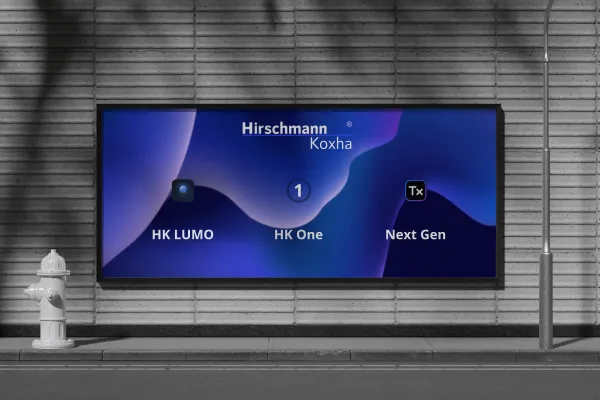
From Automotive to Legal Tech

Exactly four weeks ago, we announced that our portfolio was about to change. At the time, we deliberately kept things vague. Today, that change has a name and a face:
TaxTronik.
An open-source and free operating system for tax advisory firms.
We know how that sentence must sound to our automotive customers. So let us get one thing out of the way first:
No, we have not lost our minds.
Quite the opposite.
Two worlds with more in common than you might think
At first glance, engine control units and tax advisory firms could hardly seem further apart. Look a little closer, however, and both worlds revolve around a surprisingly similar challenge:
Complexity has to remain manageable.
Anyone working on critical automotive electronics quickly learns that precision is not optional. Repairing an engine control unit leaves little room for sloppy processes. There is no secret trick and no shortcut that can permanently compensate for poor workmanship.
A connection is either correct or it is not. A measurement is either plausible or it is not. A step was carried out and documented — or it was not.
That mindset has shaped our work for years.
And at some point, we began asking ourselves:
Why should organisational and regulatory processes be treated any differently?
At the same time as technical complexity increases, virtually every company is facing growing administrative and regulatory requirements. Data protection, anti-money laundering obligations, documentation, retention periods, deadlines, internal controls — and right in the middle of it all: tax.
Tax is no longer a peripheral issue for businesses. It is a central part of effective compliance.
But how does an automotive company end up building software for tax firms?
It is a fair question.
It is no secret that the driving force behind this development within Hirschmann & Koxha GbR is our partner Rey Koxha.
Alongside his entrepreneurial and technical work, he has spent years working intensively on business, accounting and tax-related matters. This is complemented by practical experience within a tax advisory firm — exactly where legal requirements turn into real processes and theoretical rules become everyday organisational challenges.
One thing became increasingly clear:
Many problems do not arise because people lack professional expertise. They arise because information is fragmented, processes do not communicate with one another, deadlines have to be monitored separately, and important decisions become scattered across emails, documents, specialist software and personal reminders.
That is exactly where TaxTronik comes in.
What is TaxTronik?
TaxTronik is an attempt to think of day-to-day tax practice as one connected system.
Client management, onboarding and AML processes therefore do not exist in isolation from documents, requests or deadlines. Tax returns and tax assessment notices can be linked. Reminders, workflows and deadline management are embedded directly into the client file. A client portal connects requests, documents, appointments, financial analysis and other processes with the firm.
Business reporting, planning and management accounting projections are also part of the system.
And above all of that sits something we consider far more important than simply having a long list of features:
Traceability.
TaxTronik therefore includes a comprehensive audit and compliance architecture. Processes should not merely be completed. It should also remain possible to understand afterwards what happened, when it happened and who was involved.
Ultimately, that is the same way we have approached technical fault-finding for years.
Do not guess.
Do not hope.
Trace it.
Software must not replace professional judgement
This philosophy becomes particularly clear in TaxTronik's risk and control architecture.
Alongside the technical development, Rey Koxha has also been working academically on the systematic management of tax risks. A related article published in Deutsches Steuerrecht (DStR), one of Germany's leading professional tax law journals, forms part of the conceptual foundation behind TaxTronik's risk and control architecture.
One principle is especially important to us:
TaxTronik does not replace professional judgement.
Software can structure facts, highlight potential issues, connect information, make legal references visible, delegate tasks and document decisions.
But it is not a tax adviser.
The system is therefore not designed to confidently claim that it knows the correct answer. Its purpose is to ensure that the person professionally responsible for that answer has the right information in the right place and can make a transparent, well-documented decision.
The same principle applies to the use of artificial intelligence: AI can support, identify patterns and provide additional indications. The professional assessment remains with the human expert.
From finding errors to preventing them
Perhaps that is the real connection between automotive and Legal Tech.
When repairing an engine control unit, we try to identify an error that has already occurred in a reproducible way.
With TaxTronik, we try to build structures that prevent errors from going unnoticed in the first place.
The tool is different.
The mindset is the same.
What information is missing?
Where is the risk?
Who is responsible?
Which control applies?
What happens if that control fails?
And can we still reconstruct the process afterwards?
TaxTronik emerged from exactly these questions.
Not inside a conventional software company. Not from a specification document. And not because we wanted to put yet another piece of tax software on the market.
It emerged from practical experience in two worlds that, at first glance, seem to have nothing in common.
And why free and open source?
Because we believe that fundamental tools for managing processes and risks do not always have to disappear behind yet another layer of dependency.
TaxTronik is intended to be transparent, adaptable and open to further development. Firms should be able to decide for themselves which modules they need and how they want to operate their technical environment.
Above all, however, we want to give something back.
Hirschmann & Koxha GbR grew through an international community of people who shared knowledge, solved problems together and repeatedly challenged technical limitations.
We are now taking that mentality into a new industry.
From Automotive to Legal Tech.
The path may be unusual.
To us, it now feels entirely logical.
TaxTronik. Control at scale.